Socials


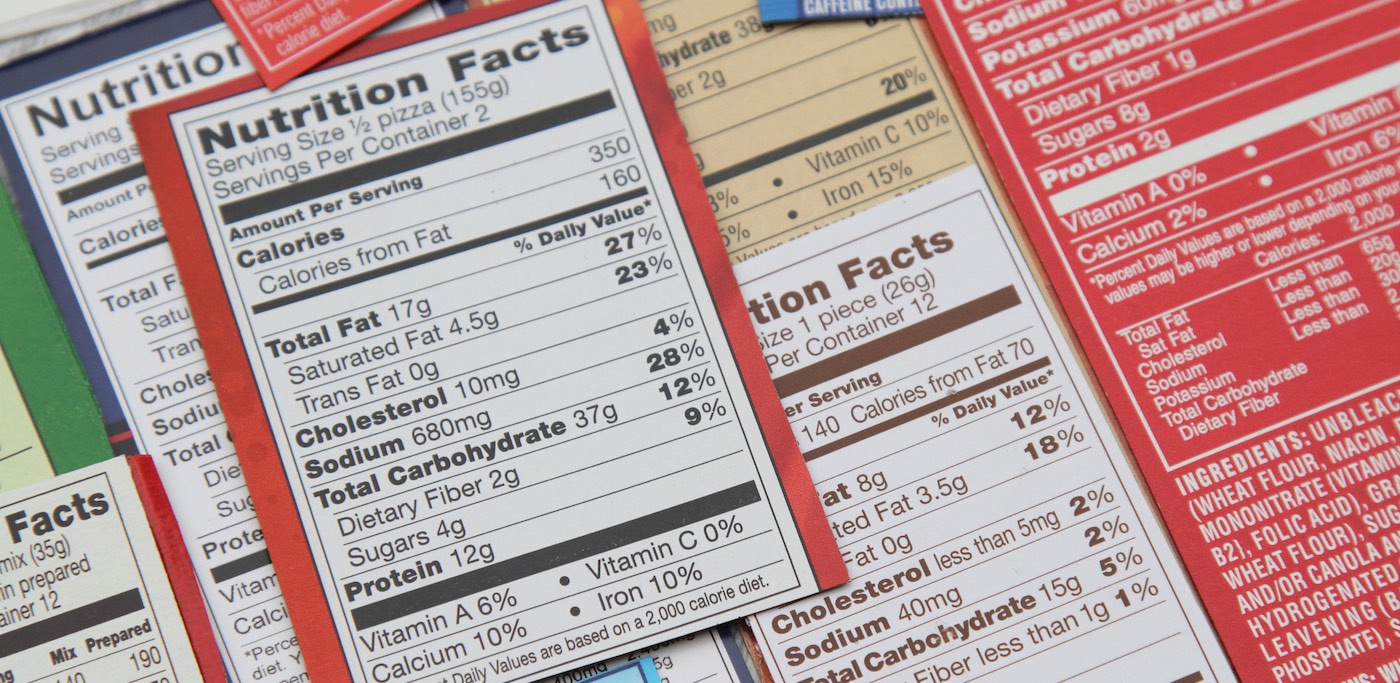
Most people decide whether a food is healthy in a few seconds. They glance at the front of the package, see words like natural, high protein, or plant based, and move on. Ultra processed foods rely on this habit. They are engineered to look nourishing while being formulated for shelf life, hyper palatability, and repeat consumption.
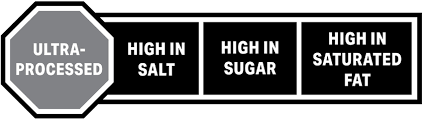
Ultra processed foods are not defined by being frozen, canned, or packaged. They are defined by formulation. They are made from industrial ingredients that are rarely used in home cooking and are combined to bypass normal hunger and satiety signals. Over time, frequent intake is associated with higher risk of metabolic dysfunction, inflammation, and appetite dysregulation, even when calorie intake appears reasonable.
The good news is that you do not need to memorize nutrition science or track macros to spot them. The label alone is enough.
Food labels are regulated. Marketing language is not. A product can legally say clean, wholesome, or natural on the front while containing emulsifiers, flavor enhancers, refined starches, and added sugars on the back. The ingredient list must reflect what is actually inside and in roughly descending order by weight.
Ultra processed foods tend to share common design goals. They must taste good instantly, remain stable for months or years, and be cheap to produce at scale. Those goals leave fingerprints on the label.
If you want a fast screen, start with three questions.
Can I recognize most of these ingredients as foods or basic cooking ingredients
Would I reasonably use these ingredients in my own kitchen
Is this product built from whole foods or reconstructed from parts
If the answers point toward industrial assembly rather than cooking, you are likely looking at an ultra processed food.
Unfamiliar or industrial ingredients
Ultra processed foods often contain substances extracted, modified, or synthesized from whole foods. Common examples include maltodextrin, modified starches, protein isolates, hydrolyzed vegetable protein, and refined seed oils. These ingredients are used to manipulate texture, sweetness, and mouthfeel rather than to nourish.
Cosmetic additives
Colorings, artificial flavors, emulsifiers, thickeners, and preservatives are not added for your health. They exist to make products look uniform, taste consistent, and last longer. Emulsifiers such as polysorbates or carboxymethylcellulose are especially common in ultra processed foods and are increasingly studied for their effects on gut barrier function.
Ingredient list length and complexity
There is no perfect cutoff, but a long list with many commas is a warning sign. Foods with five or fewer ingredients that you recognize are more likely to be minimally processed. Foods with ten or twenty ingredients often reflect formulation rather than cooking.
Multiple forms of sugar or starch
Added sugars are frequently split into several types to keep any single one from appearing high on the list. Dextrose, glucose syrup, fructose, malt syrup, and fruit juice concentrate all count. Refined starches play a similar role in rapidly driving blood sugar while adding bulk.
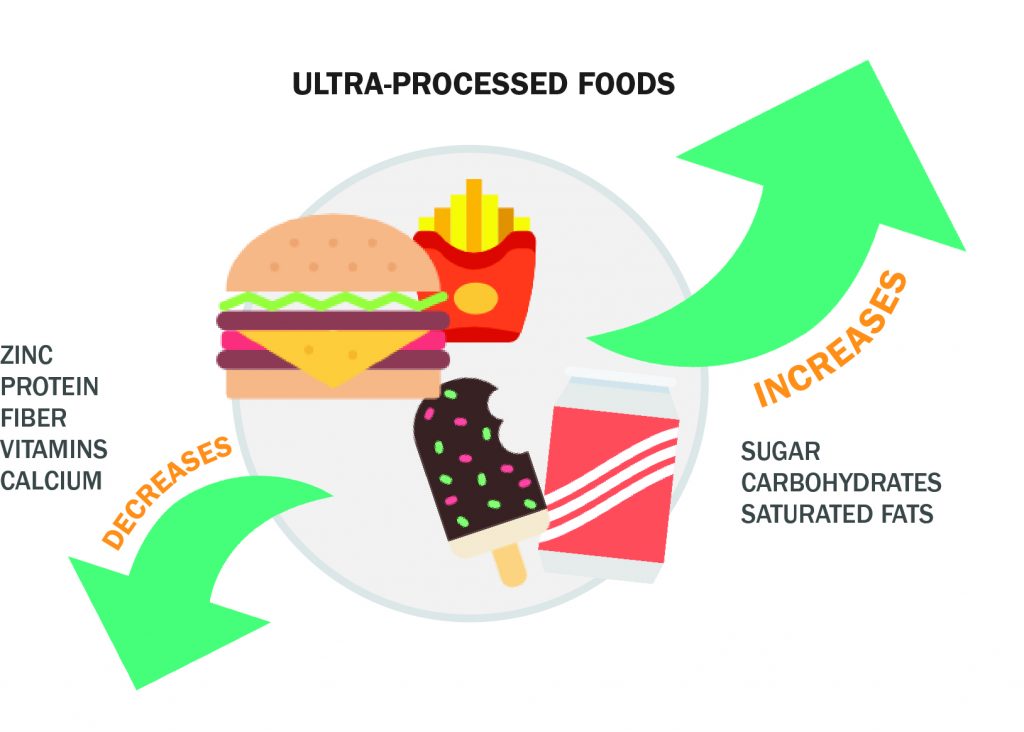
Ultra processed foods deliver calories efficiently but nutrients poorly. They are absorbed quickly, spike blood glucose, and often fail to trigger normal fullness signals. This combination increases appetite, encourages overeating, and places repeated demand on insulin regulation.
Additives and refined ingredients can also interact with the gut microbiome and immune system. While research is still evolving, observational and mechanistic studies consistently link high intake of ultra processed foods with increased risk of obesity, type 2 diabetes, cardiovascular disease, and all cause mortality.
This does not mean one packaged food will ruin your health. It means patterns matter. Foods designed for constant availability and maximum palatability tend to displace more nourishing options over time.
Pick one packaged food you buy regularly. Turn it over and read the ingredient list slowly.
Circle anything you would not cook with at home.
Note how many ingredients exist only to modify texture, flavor, or appearance.
Ask whether a simpler version exists with fewer and more recognizable ingredients.
Repeat this once or twice per grocery trip. Awareness compounds quickly.
Shop the perimeter first, but do not assume everything inside is off limits. Some canned beans, frozen vegetables, and plain dairy products are minimally processed and nutritionally solid. The difference is simplicity.
Ignore the front of the package until you have read the back. Marketing claims do not cancel out industrial formulation.
Do not aim for perfection. The goal is reduction, not elimination. Swapping even one ultra processed staple for a simpler alternative can meaningfully lower exposure over time.
Equating calories or macros with food quality. A product can be low calorie or high protein and still be ultra processed.
Assuming organic or plant based automatically means minimally processed. These labels describe sourcing, not formulation.
Over focusing on additives without considering the whole pattern. Ultra processed foods are a category problem, not a single ingredient problem.
Ultra processed foods are designed, not cooked. The ingredient list reveals that design. By learning to read it, you gain a practical skill that cuts through marketing and helps you choose foods that better support metabolism, appetite regulation, and long term health.
You do not need a perfect diet. You need better signals. The label already gives them to you if you know where to look.
Monteiro CA, Cannon G, Levy RB et al. 2019 Ultra processed foods what they are and how to identify them. Public Health Nutrition 22(5):936–941. https://doi.org/10.1017/S1368980018003762
Zinöcker MK and Lindseth IA 2018 The Western diet microbiome and metabolic disease. Nutrients 10(3):365. https://doi.org/10.3390/nu10030365
Srour B, Fezeu LK, Kesse Guyot E et al. 2019 Ultra processed food intake and risk of cardiovascular disease. BMJ 365:l1451. https://doi.org/10.1136/bmj.l1451