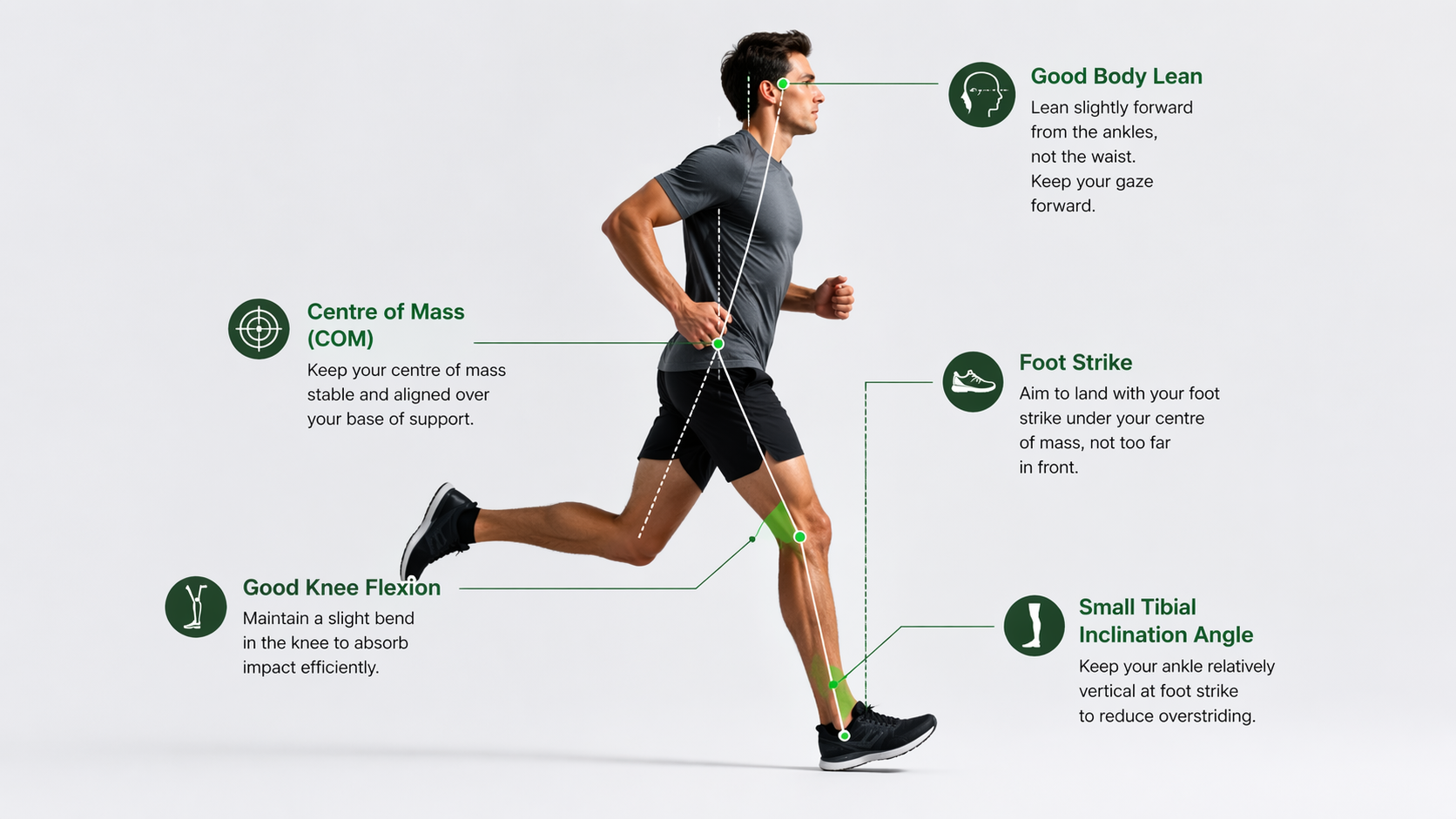
Socials



Loss of focus is often blamed on lack of motivation, discipline, or sleep. In reality, it is frequently caused by something simpler and more mechanical. Prolonged sitting.
When you sit for long periods, especially while staring at a screen, the body enters a low movement state. Large muscles in the legs remain inactive, breathing becomes shallow, and blood circulation slows. Over time, this reduces cerebral blood flow, particularly to the prefrontal cortex, the region responsible for attention, working memory, and decision making.
The brain is highly sensitive to changes in oxygen and glucose delivery. Even small reductions can produce symptoms like mental fog, slower thinking, irritability, and difficulty sustaining attention. At this point, many people reach for coffee.
Coffee feels like the solution, but it is often just a temporary override.
Caffeine works by blocking adenosine receptors. Adenosine is a neuromodulator that builds up during wakefulness and signals fatigue. When caffeine blocks these receptors, the sensation of tiredness is delayed.
What caffeine does not do is fix the underlying physiological issue. It does not meaningfully improve cerebral blood flow. In fact, caffeine can slightly constrict blood vessels in the brain, reducing blood flow even as alertness increases (Addicott et al. 2009).
This creates a mismatch. The brain is chemically stimulated but still operating under suboptimal circulation and oxygenation. The result is forced focus that often feels jittery or tense, followed by a crash once caffeine wears off.
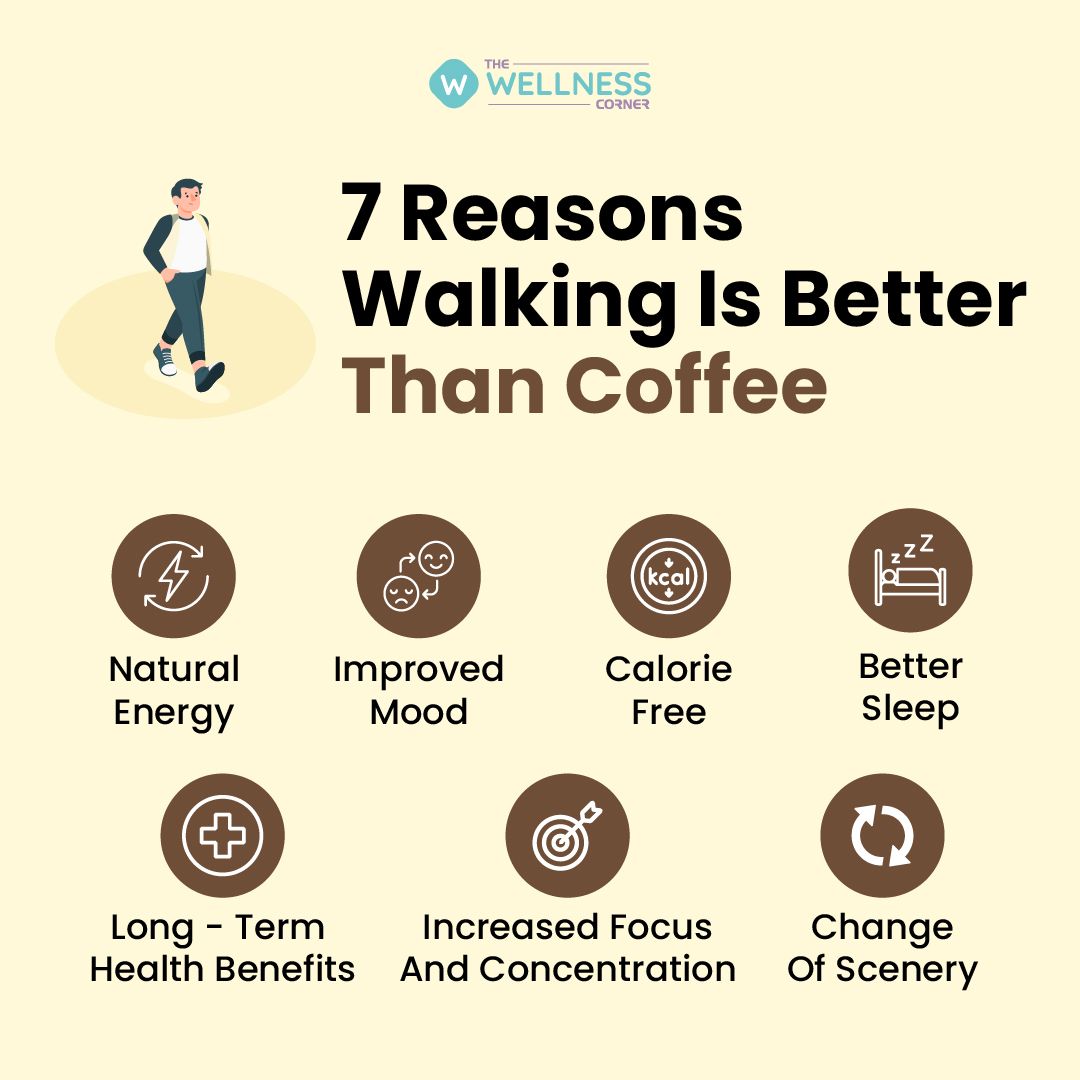
A short walk addresses the root cause directly.
As soon as you begin walking, the leg muscles contract rhythmically. This acts as a pump that pushes blood back toward the heart, increasing cardiac output. Within seconds, more oxygen rich blood reaches the brain.
Walking also naturally deepens breathing. Oxygen intake increases while carbon dioxide is cleared more efficiently. This improves blood pH balance, which directly affects neuronal firing efficiency.
At the same time, light movement stimulates the release of neuromodulators such as norepinephrine and dopamine at levels associated with calm alertness. This is different from the spike caused by stimulants. It supports focus without inducing stress.
Brain imaging studies show increased activation in attention related brain regions following brief bouts of low intensity movement (Ratey 2008).
The goal of a focus restoring walk is not exercise adaptation. It is circulation and neural reset.
Research on sedentary behavior shows that prolonged sitting rapidly impairs metabolic and vascular function, but these effects can be reversed quickly with short movement breaks. Even two minutes of light walking is enough to improve blood flow and cognitive performance (Dunstan et al. 2012).
This explains why long walks are not required. The benefit plateaus quickly. What matters is frequency, not duration.
Short, repeated movement bursts throughout the day are more effective for sustained mental performance than a single long workout before or after work.
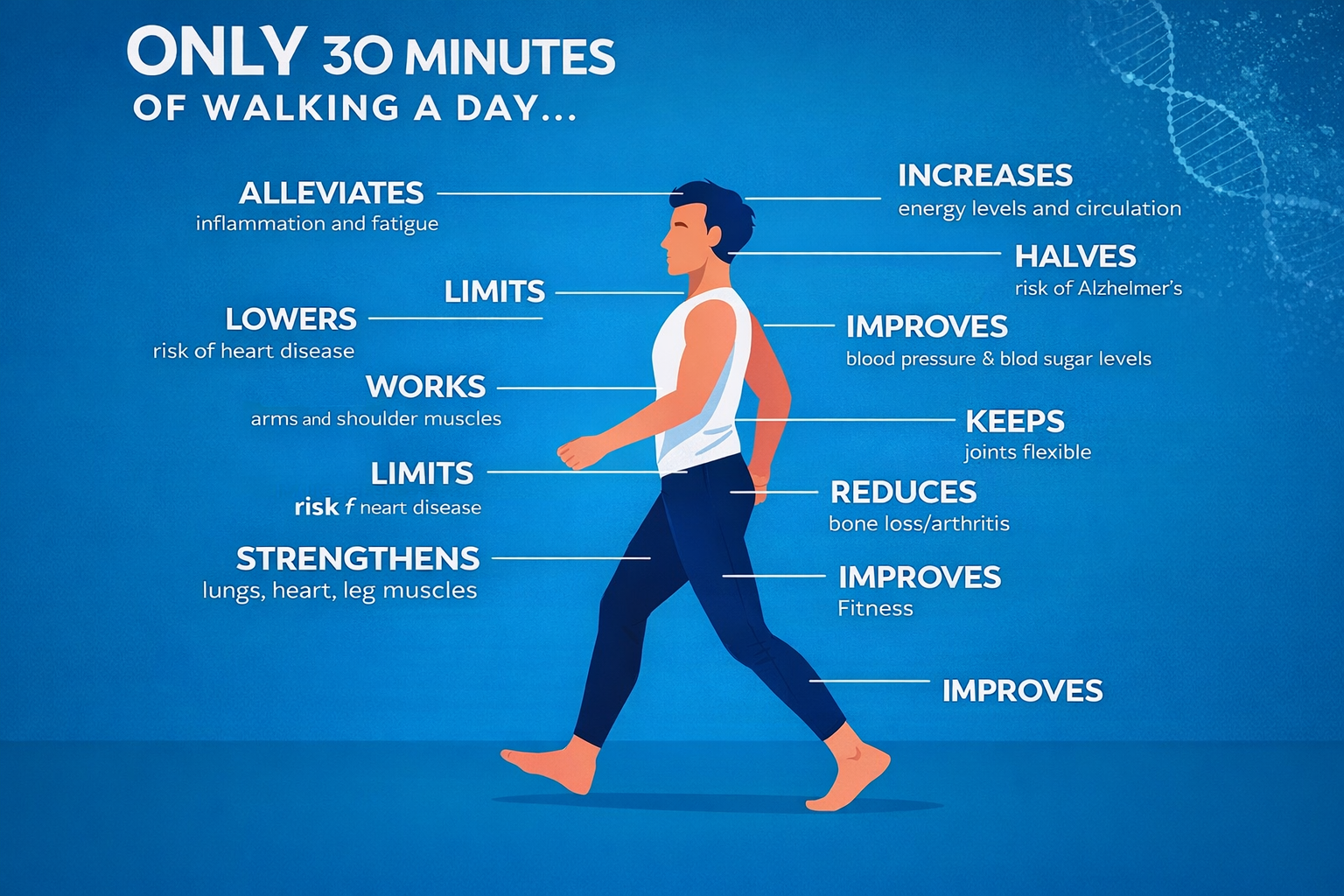
Beyond restoring alertness, walking also improves cognitive flexibility.
When the brain is under circulatory and metabolic strain, it tends to narrow attention. Thinking becomes rigid, repetitive, and solution focused in an unproductive way. This is why people feel stuck on problems after long screen sessions.
Walking restores variability in neural firing patterns. This makes it easier to shift perspectives, integrate information, and generate insights. Many people report that ideas emerge not during the walk itself, but in the minutes immediately after stopping.
This effect has been observed in studies linking movement with improved divergent thinking and creative problem solving (Oppezzo and Schwartz 2014).
A walk does not need to be outdoors or scenic to be effective.
Hallways, staircases, pacing a room, or walking in place all activate the necessary physiological systems. The key is continuous movement of the legs and an upright posture that allows full breathing.
However, removing visual input from screens enhances the effect. Looking at distant objects or simply letting the eyes move freely reduces visual strain and further lowers cognitive load.
The most effective time to walk is at the first sign of mental resistance. Slower reading, rereading the same sentence, impulsive tab switching, or irritability are all early indicators of reduced cerebral efficiency.
Walking before these symptoms escalate prevents deeper fatigue and reduces reliance on stimulants later in the day.
Over time, this practice retrains awareness. You begin to recognize that focus loss is often a signal to move, not to push harder.
Movement micro breaks
Take a 60 to 120 second walk every 60 to 90 minutes of focused work. Notice faster recovery of clarity.
Walk before caffeine
When attention drops, walk first. Use coffee only if needed afterward to avoid overstimulation.
Stuck thinking reset
Use short walks when problem solving stalls. Notice improved flexibility and insight on return.
Ratey, J. J. 2008. Spark: The Revolutionary New Science of Exercise and the Brain. Little, Brown and Company.
Addicott, M. A., Yang, L. L., Peiffer, A. M., Burnett, L. R., Burdette, J. H., Chen, M. Y., and Laurienti, P. J. 2009. The effect of daily caffeine use on cerebral blood flow. Human Brain Mapping, 30(10), 3102 to 3110.
Dunstan, D. W., Kingwell, B. A., Larsen, R., Healy, G. N., Cerin, E., Hamilton, M. T., and Owen, N. 2012. Breaking up prolonged sitting reduces postprandial glucose and insulin responses. Diabetes Care, 35(5), 976 to 983.
Oppezzo, M., and Schwartz, D. L. 2014. Give your ideas some legs. The positive effect of walking on creative thinking. Journal of Experimental Psychology: Learning, Memory, and Cognition, 40(4), 1142 to 1152.