Socials


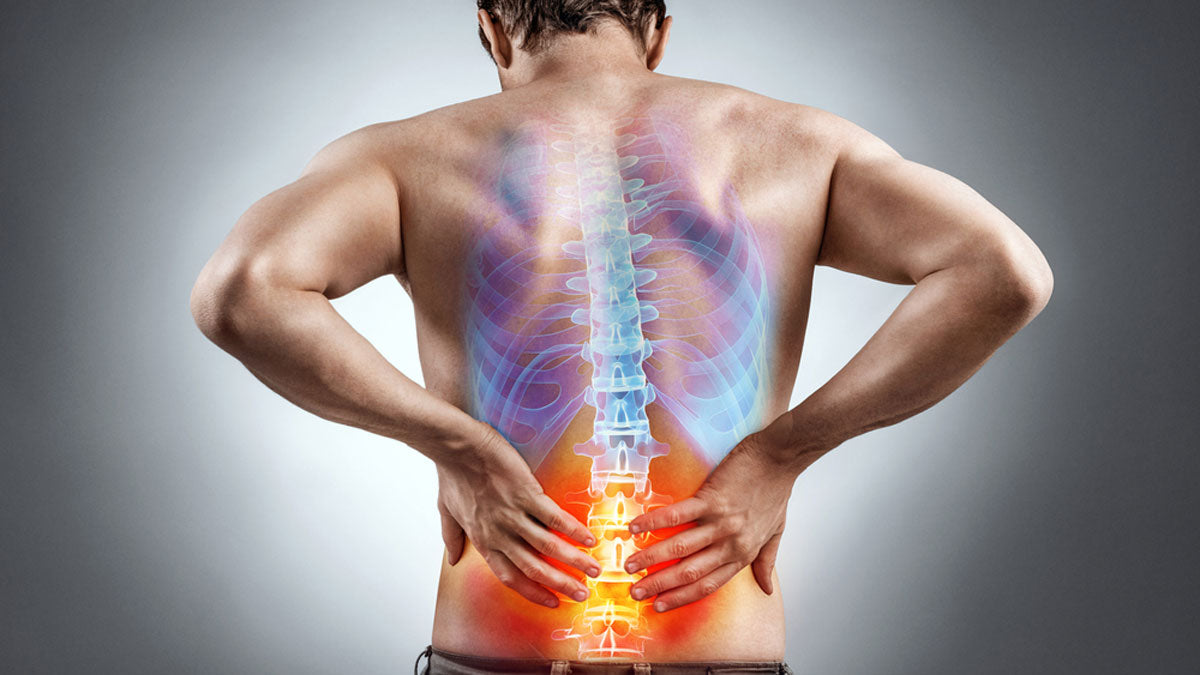
Lower back pain is usually blamed on the obvious suspects. Poor posture. Weak core muscles. Too much sitting. Bad lifting technique. These factors matter, but they are often downstream problems rather than root causes.
What is frequently overlooked is the role of the feet.
Every step you take begins at the ground. The feet are the first point of contact between your body and external force. How well they move, adapt, and transmit load shapes everything that happens above them. When foot mobility is limited, force does not disappear. It travels upward, often accumulating stress in the knees, hips, and eventually the lower back.
For many people, back pain does not start in the spine. It starts at the feet.
Human feet evolved to be flexible, strong, and highly sensitive. Each foot contains twenty six bones, dozens of joints, and thousands of nerve endings designed to adapt to uneven surfaces and absorb impact.
Modern footwear changes this environment completely.
Narrow toe boxes compress the forefoot and reduce natural toe splay. Stiff soles limit movement through the midfoot. Cushioned heels alter how force is absorbed and how the ankle moves during walking. Over time, this reduces both mobility and sensory input from the feet.
When the foot becomes stiff and insensitive, it can no longer do its primary job well. It stops absorbing force efficiently and stops providing clear feedback to the nervous system.
The body compensates elsewhere.
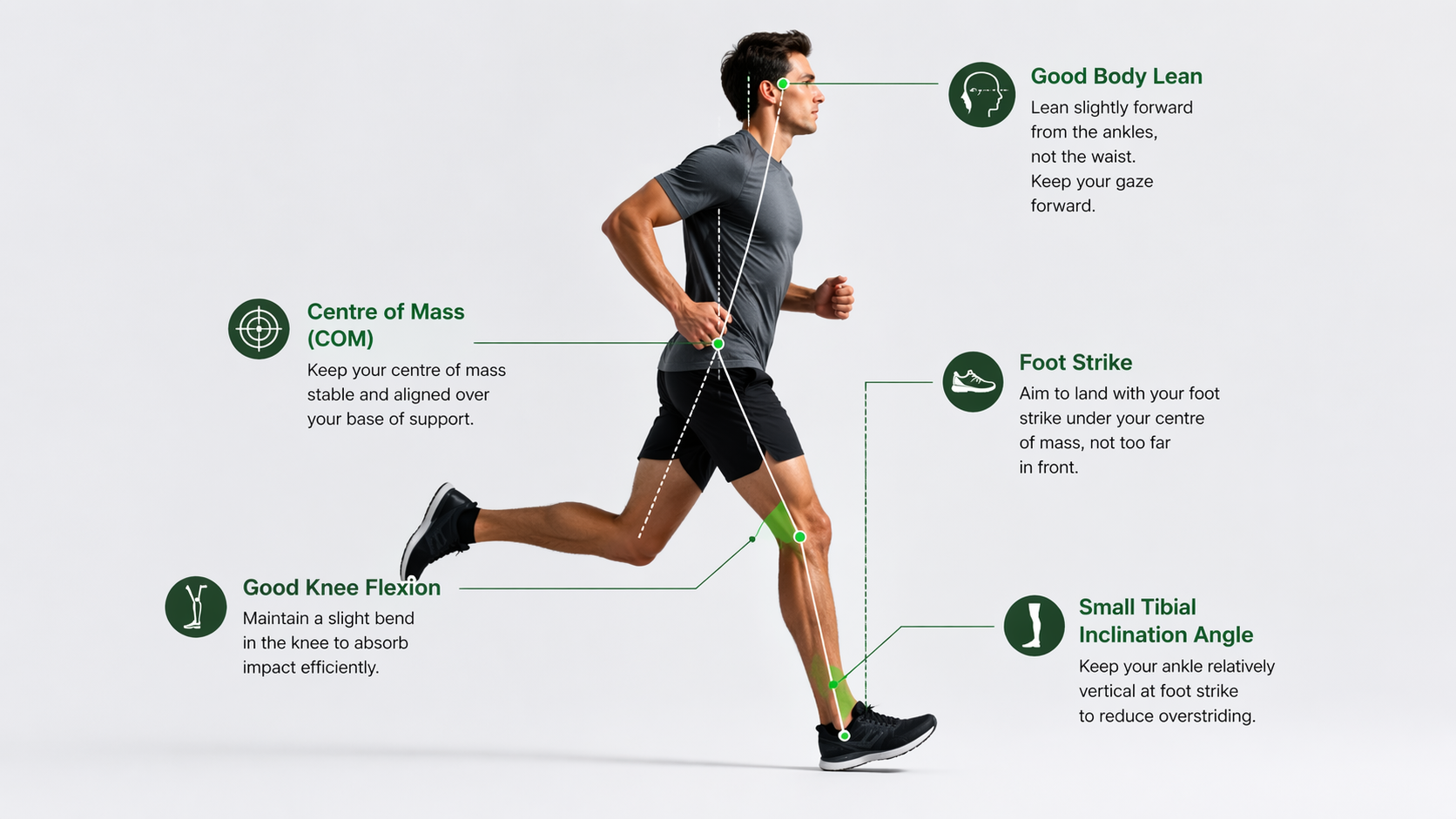
Walking, running, and standing are not isolated joint actions. They are whole body events linked through what is often called the kinetic chain.
In a healthy system, the foot adapts to the ground, the ankle moves freely, the knee tracks smoothly, the hip rotates efficiently, and the spine remains relatively stable.
When foot mobility is limited, force is transferred upward instead of being dissipated locally. Impact that should be absorbed by the foot and ankle is redirected into the knees, hips, and lower back.
Over thousands of steps per day, this adds up.
The lower back often becomes the site of compensation because it sits at the junction between lower body movement and trunk stability. It is asked to manage forces it was never meant to handle repeatedly.
Restricted feet do not just change force distribution. They change how you move.
Limited toe extension can shorten stride length. Reduced ankle mobility can alter gait mechanics. Poor sensory input from the soles of the feet can reduce balance and coordination.
When the feet fail to move well, the body often increases motion elsewhere to keep walking efficiently. The hips may rotate more than intended. The lumbar spine may twist or extend excessively to make up the difference.
These compensations are subtle and usually painless at first. Over time, they increase tissue strain, fatigue stabilizing muscles, and raise the risk of persistent lower back discomfort.
Pain often shows up far from the original restriction.
The feet are not just mechanical structures. They are sensory organs.
Nerve endings in the soles provide constant feedback about pressure, surface texture, and balance. This information helps the nervous system regulate muscle tone and movement patterns throughout the body.
When feet are chronically cushioned and constrained, sensory input is dulled. The brain receives less information about ground contact and stability. In response, the nervous system often increases muscle tension elsewhere to create a sense of safety.
The lower back is a common target for this increased tone.
Stiffness and guarding in the lumbar region can be a protective response to uncertainty at the ground level rather than a primary back problem.
Traditional back pain approaches often focus on strengthening the core or correcting posture in isolation. While these strategies can help, they sometimes fail because they do not address the source of altered load and movement.
Improving foot mobility can change how force enters the body. It can improve gait mechanics, restore more efficient movement patterns, and enhance sensory feedback.
When the feet do their job better, the spine often has to do less.
This does not mean foot work replaces strength training or rehabilitation. It means it complements them by addressing the foundation rather than only the structure above it.
Foot mobility does not require complex tools or extreme interventions. Small, consistent changes matter most.
Choosing footwear with wider toe boxes allows the forefoot to spread naturally and reduces chronic compression. Flexible soles permit the foot to move through its full range rather than being locked into a rigid shape.

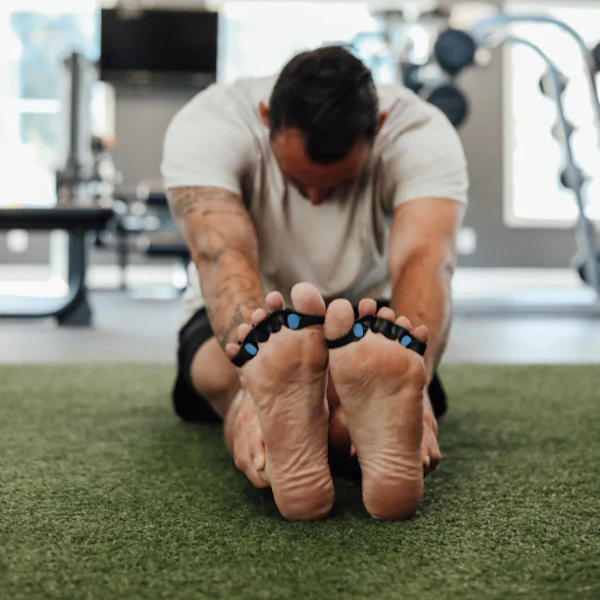
Barefoot drills can help reintroduce natural movement and sensory input. Simple barefoot walking at home, gentle toe mobility exercises, and controlled balance work can begin restoring function.
The goal is not to abandon shoes entirely or force dramatic changes overnight. The goal is to give the feet opportunities to move, feel, and adapt again.
Lower back pain is complex and rarely caused by a single factor. However, consistently ignoring the feet is a mistake.
The body works as an integrated system. Problems at the foundation rarely stay local. Addressing foot mobility is not a shortcut or a cure all, but it is often a missing piece.
By thinking ground up rather than top down, you shift from chasing symptoms to improving how the entire system handles load and movement.
Sometimes the most effective way to help the back is to start where the body meets the ground.
Lower back pain is not always a back problem. Limited foot mobility can alter force transfer, disrupt movement patterns, and reduce sensory input in ways that quietly overload the spine over time.
Restoring natural foot function can change how the entire kinetic chain behaves. When the feet move better, the body often moves more efficiently and the lower back is placed under less strain.
ABMP. (2025). Foot mechanics and kinetic chain dynamics. https://www.abmp.com/massage-and-bodywork-magazine/foot-mechanics-and-kinetic-chain-dynamics
Biology Insights. (2025). Can foot pain cause back pain? The connection explained. https://biologyinsights.com/can-foot-pain-cause-back-pain-the-connection-explained/
Fall Creek Foot & Ankle. (2025). Are foot pain and back pain related? https://fallcreekfootandankle.com/are-foot-pain-and-back-pain-related/
Steady Foot Clinic. (2025). How foot mechanics affect knee, hip, and back pain. https://steadyfootclinic.ca/how-foot-mechanics-affect-knee-hip-and-back-pain/
The American Chiropractor. (2025, December 1). The kinetic chain connection. https://theamericanchiropractor.com/index.php/article/2025/12/1/the-kinetic-chain-connection