Socials


At first glance, a traditional Japanese meal can look almost too simple. A bowl of rice. A soup. Three small dishes. No calorie math. No elaborate plating. No macro tracking apps. And yet this structure has supported one of the longest living populations in the world.
Ichiju Sansai, which translates to one soup and three sides, is not a diet. It is a framework. It shapes how a meal is built, how nutrients are distributed, and how satiety is naturally regulated. Much like learning to read a nutrition label helps you decode packaged food, understanding Ichiju Sansai teaches you how to assemble a biologically coherent meal without overthinking it.
Modern nutrition often zooms in on individual nutrients. Protein grams. Carbohydrate counts. Fat percentages. But the human body evolved responding to patterns, not isolated numbers. It reacts to diversity, texture, fiber complexity, micronutrient density, and meal sequencing.
Traditional Japanese dietary patterns are associated with lower rates of cardiovascular disease and longer life expectancy, partly due to their emphasis on plant diversity, seafood, fermented foods, and moderate portions (Willcox et al., 2007). The structure of Ichiju Sansai naturally distributes macronutrients while supporting micronutrient adequacy and glycemic stability.
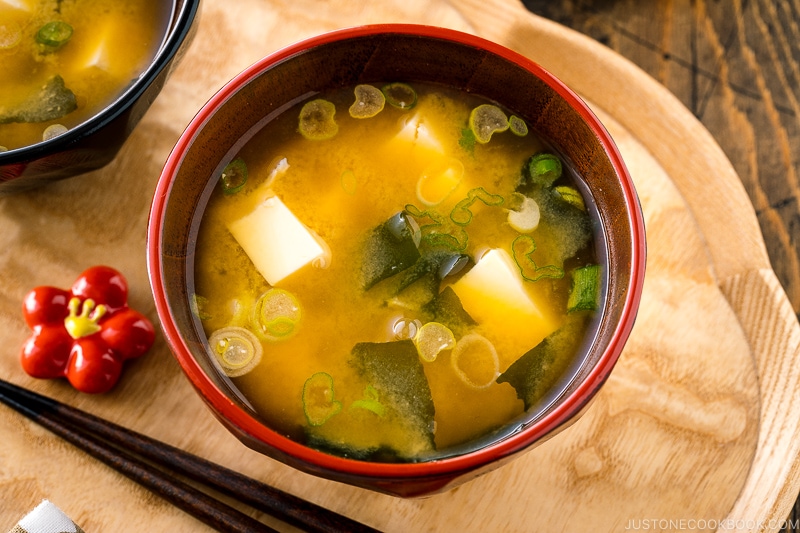
Rice provides a steady carbohydrate base. Miso soup often contributes fermented soybean paste, seaweed, and tofu, offering probiotics and minerals. The three side dishes typically include one protein source such as fish or legumes, one vegetable preparation, and one additional seasonal plant based dish. Together, this arrangement creates a balanced glycemic response and a broader nutrient spectrum than a single large entrée would provide.
Research on dietary patterns consistently shows that variety in plant foods is linked to improved gut microbiome diversity, which is associated with metabolic resilience and lower inflammation (Tilg and Moschen, 2014). Ichiju Sansai operationalizes this principle without requiring conscious tracking.
The brilliance of Ichiju Sansai lies in constraint. By defining a meal as one soup and three sides, it prevents excess while ensuring diversity. There is no need to eliminate food groups or micromanage portions. The framework does the work.
One soup anchors hydration and digestion. Warm liquids stimulate gastric motility and can enhance satiety signals. When soup includes fermented miso, it may also contribute beneficial microbes and bioactive compounds, although their survival varies depending on preparation temperature.
The three sides create contrast. Typically, one focuses on protein, often fish rich in omega three fatty acids. Marine based omega three intake is associated with reduced cardiovascular risk and improved metabolic health (Calder, 2015). Another side emphasizes vegetables, frequently lightly cooked or pickled, preserving fiber and phytonutrients. The third might incorporate tofu, sea vegetables, or simmered roots, contributing additional minerals and slow digesting carbohydrates.
Rice, served in a moderate bowl, provides the primary carbohydrate source. Importantly, it is rarely eaten in isolation. Consuming carbohydrates alongside protein, fiber, and fermented foods can moderate postprandial glucose spikes compared to refined carbohydrates consumed alone (Augustin et al., 2015). The sequence and combination matter.
In Western food culture, complexity is often mistaken for nutritional superiority. Superfood powders. Multi ingredient smoothie bowls. Protein bars fortified with a dozen additives. Ichiju Sansai suggests the opposite. Simplicity with diversity is enough.
You do not need excessive portion sizes to feel satisfied. Energy density in traditional Japanese meals tends to be lower due to higher vegetable volume and lower saturated fat content (Willcox et al., 2007). This allows for fullness without caloric overload.
You also do not need perfect macronutrient ratios at every meal. The cumulative weekly pattern matters more than a single plate. Ichiju Sansai focuses on consistency. Repeated exposure to vegetables, fermented foods, seafood, and moderate rice portions creates a dietary rhythm that supports metabolic stability.

From a systems biology perspective, the way food is arranged can influence how it is metabolized. Diverse fibers feed different microbial species. Fermented foods introduce bioactive peptides. Marine fats alter inflammatory signaling pathways. Warm soups stimulate digestive readiness.
Ichiju Sansai is a template that quietly integrates these variables. Instead of asking how many grams of protein you consumed, it asks whether your meal included protein at all. Instead of debating carb restriction, it ensures carbohydrates are contextualized within fiber and micronutrients. Instead of chasing novelty, it returns to repetition and seasonality.
Dietary pattern research increasingly emphasizes whole food matrices rather than isolated nutrients (Augustin et al., 2015). The matrix concept recognizes that the physical and chemical structure of food influences digestion and absorption. In Ichiju Sansai, foods are minimally processed and consumed in recognizable forms, preserving their natural matrices.
You do not need to adopt every aspect of traditional Japanese cuisine to benefit from its logic. The value lies in the structure. One soup. Three sides. A staple grain.
If you apply this framework, your plate automatically gains diversity. You are more likely to include vegetables. More likely to balance carbohydrates with protein. More likely to moderate portions without deliberate restriction.
Ichiju Sansai is not about nostalgia or aesthetic minimalism. It is a practical metabolic design. It reduces decision fatigue while increasing nutrient breadth. It favors variety over volume and structure over obsession.
Instead of asking whether your meal is low carb or high protein, ask a different question. Does it include a warm element, a primary protein, and multiple plant sources? Is there contrast in texture and preparation? Does the meal feel complete without excess?
In a world saturated with nutritional noise, Ichiju Sansai offers clarity through composition. Structure creates balance. Balance creates stability. Stability supports longevity.
Augustin, L. S. A., Kendall, C. W. C., Jenkins, D. J. A., Willett, W. C., Astrup, A., Barclay, A. W., Björck, I., Brand Miller, J. C., Brighenti, F., Buyken, A. E., Ceriello, A., La Vecchia, C., Livesey, G., Liu, S., Riccardi, G., Rizkalla, S. W., Sievenpiper, J. L., Trichopoulou, A., Wolever, T. M. S., and Baer-Sinnott, S. (2015). Glycemic index, glycemic load and glycemic response: An International Scientific Consensus Summit from the International Carbohydrate Quality Consortium. Nutrition, Metabolism and Cardiovascular Diseases, 25(9), 795 to 815.
Calder, P. C. (2015). Marine omega three fatty acids and inflammatory processes: Effects, mechanisms and clinical relevance. Biochimica et Biophysica Acta, 1851(4), 469 to 484.
Tilg, H., and Moschen, A. R. (2014). Microbiota and diabetes: An evolving relationship. Gut, 63(9), 1513 to 1521.
Willcox, D. C., Willcox, B. J., and Suzuki, M. (2007). The Okinawan diet: Health implications of a low calorie, nutrient dense, antioxidant rich dietary pattern low in glycemic load. Journal of the American College of Nutrition, 26(4), 361S to 365S.