Socials



Starting a new fitness routine can improve strength, energy, and long term health, but beginners often get injured by progressing faster than the body can adapt. Most early injuries are not caused by one extreme workout. They usually develop from poor movement patterns, weak stabilizing muscles, lack of recovery, or ignoring warning signs.
The body adapts well to training when stress increases gradually. The key is building a foundation strong enough to handle intensity before pushing harder.
When people first begin exercising, motivation often grows faster than physical readiness. Muscles may feel capable of handling difficult workouts, while joints, tendons, and connective tissues still need time to strengthen. Repeating movements with poor mechanics or insufficient recovery increases strain on the body and raises injury risk.
Many beginners also underestimate the role of mobility, sleep, and proper warm ups. Training is not just about effort. It is about how well the body tolerates and recovers from stress over time (American College of Sports Medicine, 2021).

• Too much, too soon: Rapid increases in workout volume, weight, or intensity place excess stress on muscles and joints before adaptation occurs.
• Poor exercise form: Incorrect movement patterns increase unnecessary strain on the knees, shoulders, hips, and lower back.
• Weak stabilizing muscles: Small support muscles around the core, hips, and shoulders often fatigue before larger muscles do, leading to compensation patterns.
• Limited mobility: Tight joints and restricted range of motion force the body into inefficient positions during exercise.
• Skipping recovery: Rest days, sleep, and nutrition are essential for tissue repair and adaptation.
• Ignoring warning signs: Sharp pain, swelling, or repeated discomfort are signals that something needs adjustment.
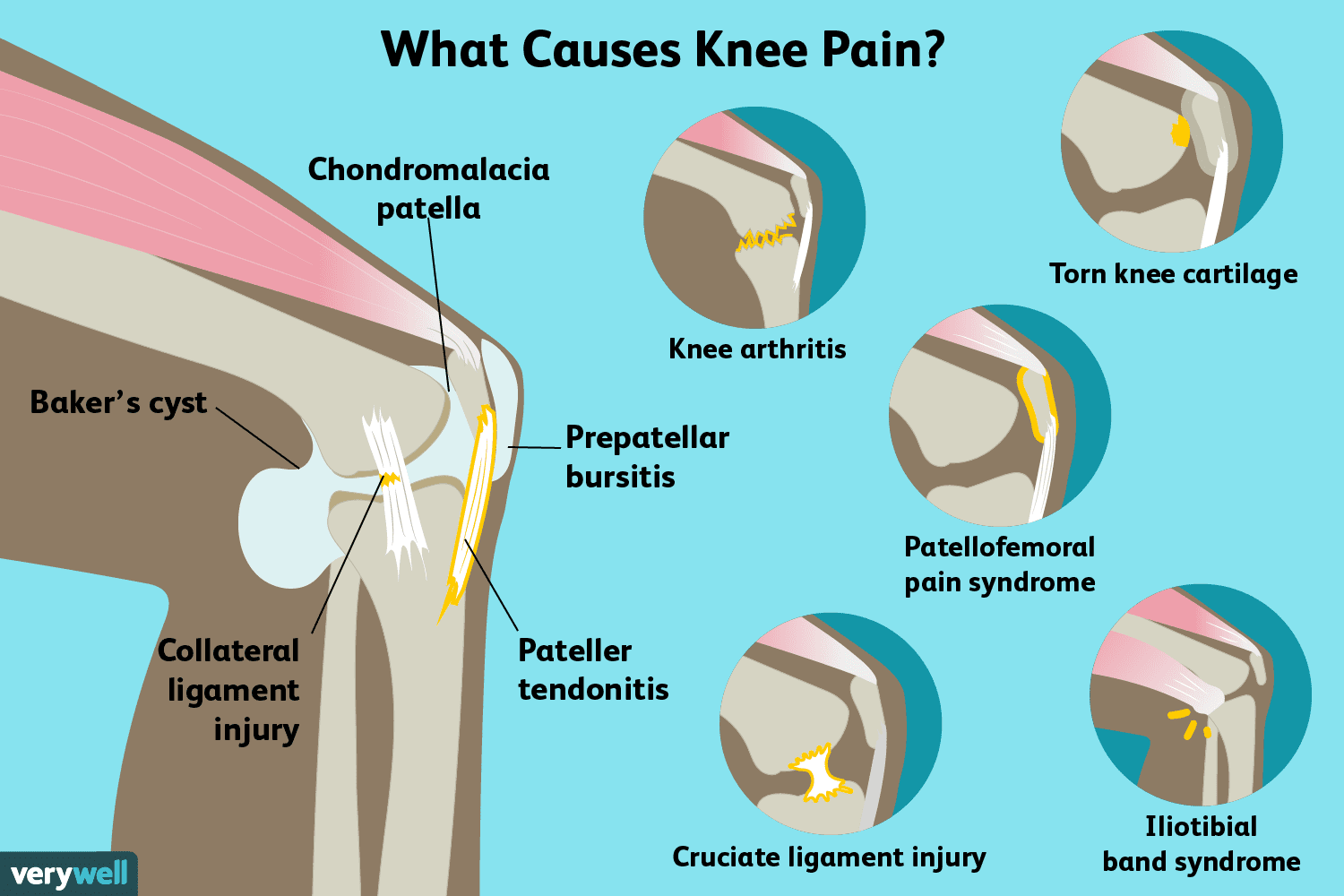
Often caused by poor squat mechanics, weak hips, or rapidly increasing running volume. Pain around the kneecap is especially common in beginners who overload movements too quickly.
Usually linked to improper lifting mechanics, weak core stability, or poor posture during exercises like deadlifts or rows.
Frequently develops from unstable pressing movements, poor posture, or overtraining chest exercises while neglecting upper back strength.
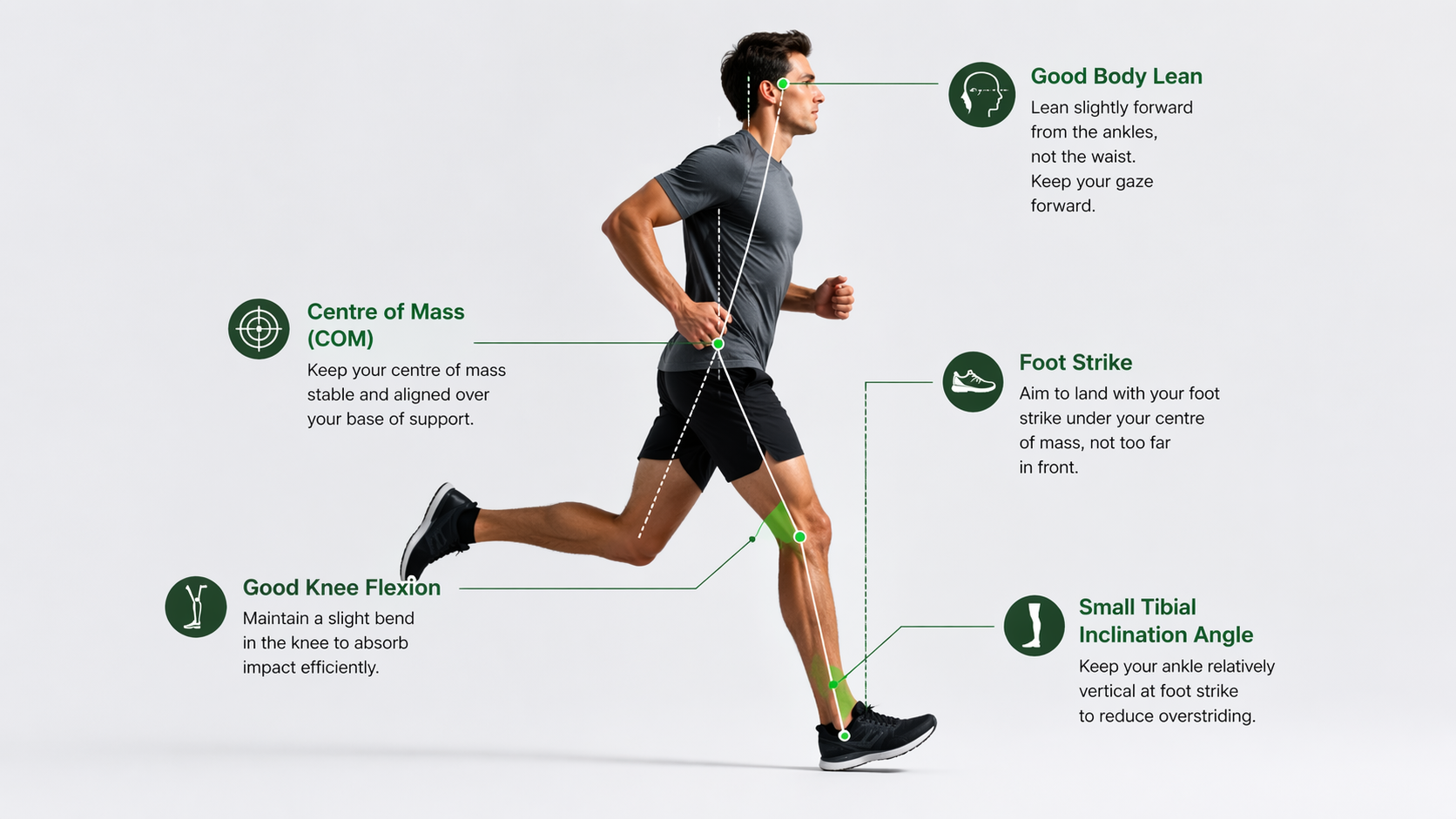
Common in new runners or people suddenly increasing cardio intensity. Hard surfaces, poor footwear, and inadequate recovery contribute heavily.
Tendons adapt more slowly than muscles. Repetitive stress without enough recovery can lead to elbow, knee, or Achilles tendon pain (Kraemer and Ratamess, 2004).
Learning proper movement mechanics matters more than lifting heavier weight early on. Controlled, stable reps build safer long term progress than rushing intensity.
If technique breaks down, reduce the load or simplify the movement.
Increase training volume and intensity slowly. A moderate weekly increase allows muscles, joints, and tendons to adapt more safely over time.
Consistency beats sudden bursts of extreme effort.
A good warm up prepares joints, muscles, and the nervous system for movement. Focus on dynamic movements and muscle activation rather than only static stretching.
Spend five to ten minutes increasing blood flow and rehearsing movement patterns before training (Behm and Chaouachi, 2011).
Mobility improves movement quality, while stability helps control force safely. Beginners benefit greatly from strengthening the hips, core, upper back, and shoulders alongside major exercises.
Recovery is part of training, not separate from it. Sleep, hydration, nutrition, and rest days directly influence injury risk and performance.
Training hard without recovery usually leads to declining movement quality and rising fatigue.
Muscle soreness is generally dull, temporary, and symmetrical. Injury related pain is often sharp, localized, or worsens with movement.
Pain that persists or repeatedly returns should not be ignored.

Two to four quality workouts per week is enough for most beginners. More is not automatically better.
Slower, controlled reps improve technique awareness and reduce momentum based compensation.
Feeling destroyed after every workout is not a sign of effective training. Sustainable progress comes from repeatable sessions, not constant burnout.
Machines, supported movements, and simple compound exercises often help beginners learn mechanics more safely before advancing to complex variations.
• Copying advanced workouts from social media too early
• Increasing weight every session without mastering form
• Training through sharp pain
• Neglecting warm ups and mobility
• Doing excessive cardio or high impact training immediately
• Underestimating sleep and nutrition
Talk to a healthcare or fitness professional if you experience:
• Joint swelling
• Sharp or stabbing pain
• Persistent pain lasting more than several days
• Numbness or tingling
• Pain that worsens during normal movement
• Loss of strength or range of motion
Early intervention often prevents small problems from becoming long term injuries (Meeuwisse et al., 2007).
Most beginner injuries are preventable. The body responds well to training when stress increases gradually, movement quality stays consistent, and recovery is prioritized. Focusing on proper form, controlled progression, mobility, and rest creates a stronger foundation for long term fitness success.
The goal is not to train as hard as possible immediately. The goal is to train consistently enough to improve without interruption.
American College of Sports Medicine. 2021. ACSM's Guidelines for Exercise Testing and Prescription. 11th edition. Philadelphia: Wolters Kluwer.
Behm DG and Chaouachi A. 2011. A review of the acute effects of static and dynamic stretching on performance. European Journal of Applied Physiology 111(11):2633–2651. https://doi.org/10.1007/s00421-011-1879-2
Kraemer WJ and Ratamess NA. 2004. Fundamentals of resistance training: progression and exercise prescription. Medicine & Science in Sports & Exercise 36(4):674–688. https://doi.org/10.1249/01.MSS.0000121945.36635.61
Meeuwisse WH, Tyreman H, Hagel B et al. 2007. A dynamic model of etiology in sport injury: the recursive nature of risk and causation. Clinical Journal of Sport Medicine 17(3):215–219. https://doi.org/10.1097/JSM.0b013e3180592a48