Socials



Sprint intervals create brief surges of effort that place your heart, lungs, and muscles under higher demand than steady workouts ever reach. This rapid jump in intensity is not just a strength or speed stimulus. It forces the cardiovascular system to adapt quickly. The heart learns to pump more blood each beat and the body becomes more efficient at moving and using oxygen. What looks like pure power work is also a potent aerobic upgrade.

Your heart responds differently to sudden effort than to a long steady pace. When intensity spikes, stroke volume rises. This means more blood ejected per beat. The transient stress increases shear forces on the blood vessel walls, which improves vascular function and circulation over time. Research also shows that short repeated intervals can improve aerobic capacity as effectively as or sometimes more effectively than moderate continuous training when total workload is equal (Gibala and Jones 2013).
At the muscular level, high effort signals mitochondria to expand in number and efficiency. These adaptations allow muscles to generate energy faster and with less fatigue during future aerobic work. Short sprints therefore influence both cardiovascular output and cellular machinery.
If you want to strengthen heart function, use brief sprints with full form rather than long grinding intervals. The sharp rise in heart rate provides the stimulus.
If your goal is better oxygen efficiency, use 10 to 15 second bursts that feel powerful but controlled. This trains the body to use oxygen quickly without drifting into sloppy mechanics.
If you want mitochondrial benefits, limit the total number of sprints but maintain quality. High output creates the signal. Too many repeats dilute it.
If you are worried about joint stress, stay on a track, turf, or hill. Uphill sprints reduce impact and still generate strong cardiovascular load.
The body does not treat sprinting as an isolated anaerobic event. Even during very short bursts, the heart rate response and post sprint oxygen consumption contribute to aerobic development. Studies show that interval training increases maximal oxygen uptake by improving both central adaptations such as cardiac output and peripheral adaptations such as oxygen extraction by working muscles (MacInnis and Gibala 2017).

Short sprints also boost mitochondrial biogenesis. This means new mitochondria form and existing ones function better. Since mitochondria are responsible for aerobic energy production, improvements here translate directly to better endurance. What feels like speed work is also metabolic training.
Pick one target such as stronger heart response, better sprint mechanics, or improved recovery.
Start with four to six sprints of 10 to 15 seconds.
Rest fully between repeats so each effort stays crisp.
Track how fast your breathing settles and how your form holds across intervals.
Repeat for a week and adjust work to rest ratio based on fatigue and recovery.
Use a warm up of light jogging or mobility work so your muscles and tendons are ready for high force.
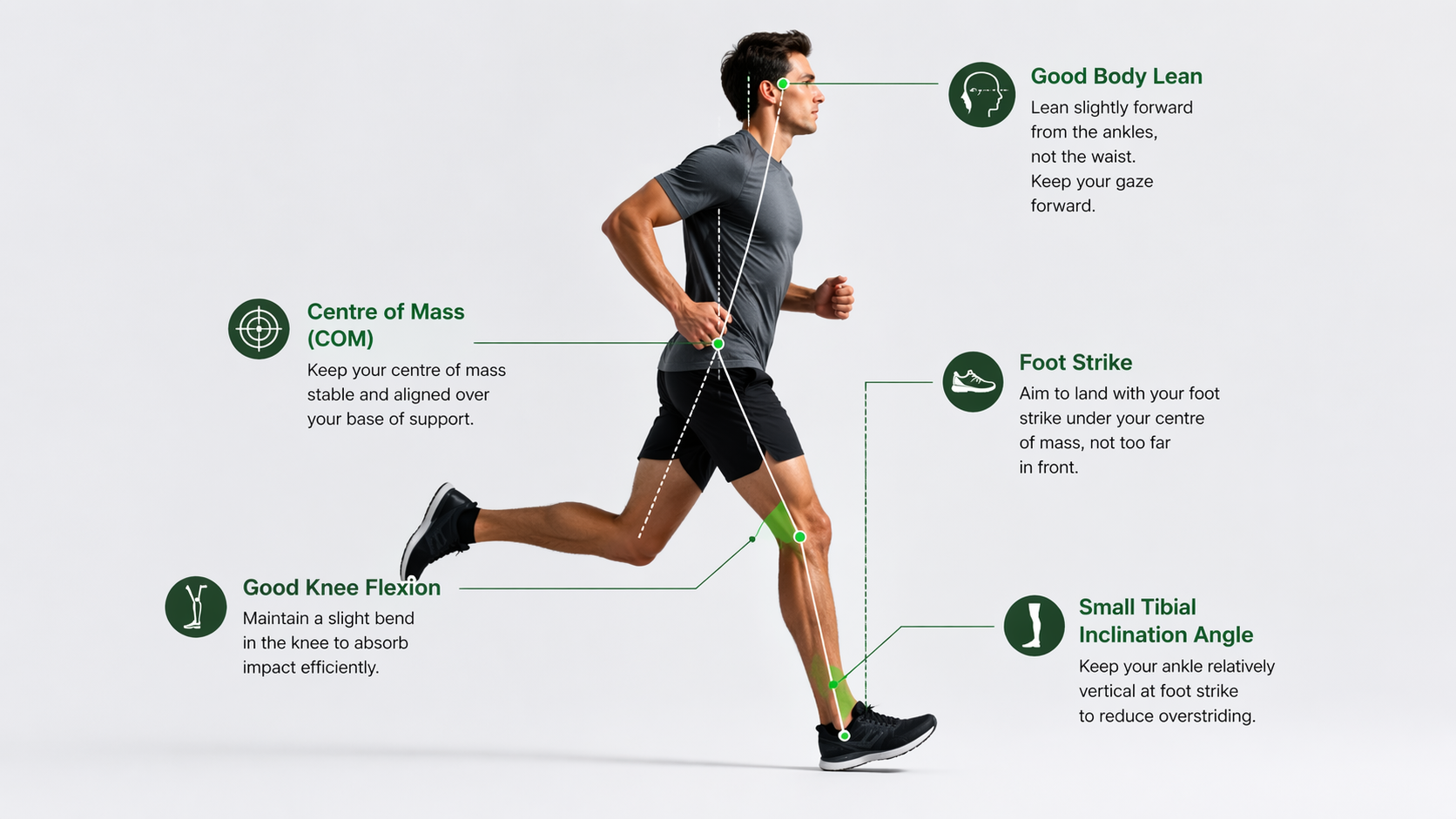
Keep the torso tall and relax the hands so tension does not slow your stride.
Place sprints early in a workout when your nervous system is fresh.
Stop the session if your technique deteriorates. Quality matters more than volume.
Doing too many sprints in one session. High output drains the nervous system and increases injury risk.
Starting at maximal intensity without progression. The body adapts best when it has room to build.
Skipping warm ups. Cold muscles do not handle fast acceleration well.
Using sprints too often. Twice a week is enough for most people to gain fitness without overtraining.
Short sprints strengthen the heart, improve oxygen efficiency, and stimulate powerful metabolic adaptations that support endurance. They do not replace steady training but they complement it in ways long slow work cannot. The sudden rise in intensity is the signal. The cardiovascular and muscular improvements are the reward. When done with control and adequate rest, sprint intervals are one of the simplest ways to upgrade aerobic capacity.
Gibala MJ and Jones AM 2013 Physiological and performance adaptations to high intensity interval training. Nestle Nutrition Institute Workshop Series 76:51 to 60. https://doi.org/10.1159/000350256
MacInnis MJ and Gibala MJ 2017 Physiological adaptations to interval training and the role of exercise intensity. Journal of Physiology 595(9):2915 to 2930. https://doi.org/10.1113/JP273196