Socials


Jaw pain, clicking, headaches, and nighttime teeth grinding are commonly treated as dental issues. Mouth guards are prescribed, bite alignment is examined, and teeth are blamed. But for many people, these symptoms do not begin in the jaw. They begin higher up in the neck.
The jaw does not function in isolation. It is part of a closely connected system involving the cervical spine, head posture, and the nervous system. When the neck becomes stiff, compressed, or chronically held in a forward head position, the jaw often absorbs the consequences. Over time, this dysfunction can appear as temporomandibular joint pain, facial tension, headaches, and bruxism, particularly during sleep.
Understanding the neck and jaw relationship is essential for achieving long term relief rather than temporary symptom control.
The cervical spine forms the structural base for head and jaw movement. Every time you chew, swallow, speak, or yawn, the jaw coordinates with subtle movements of the upper cervical segments. This coordination allows the jaw joint to open and close smoothly while forces are distributed safely through the skull and spine.
When the neck is mobile and well aligned, the jaw moves with minimal resistance. When neck mobility is restricted due to posture, prolonged screen use, stress related muscle tension, or prior injury, the system adapts. These adaptations typically increase strain rather than reduce it.
A stiff neck alters head positioning, often shifting the head forward relative to the rib cage. This change increases resting tension in the muscles of the jaw, face, and throat. Over time, the jaw is forced to operate from a less efficient position, increasing joint stress and muscular fatigue.
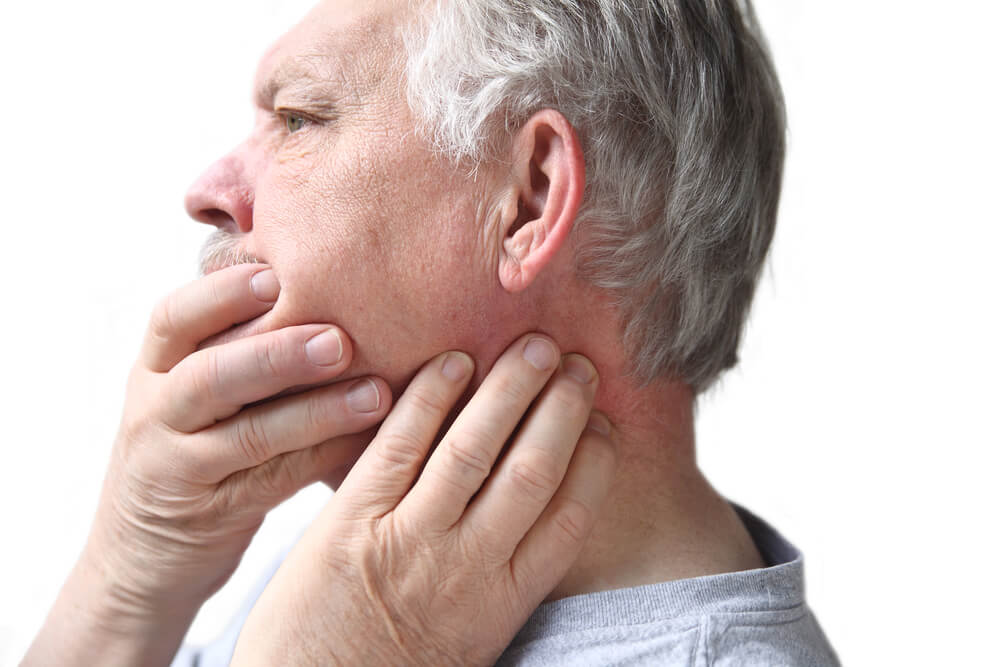
Healthy jaw movement depends on coordination between the neck, jaw joint, and nervous system. Limited cervical mobility signals the brain that stability is reduced. In response, the nervous system increases muscle activation in other regions, most commonly the jaw.
One contributing factor is altered jaw mechanics. Forward head posture changes how the jaw sits in the joint, forcing it to open and close at a suboptimal angle. This can result in joint clicking, uneven force distribution, and progressive irritation.
Another factor is increased muscle tone. Tight neck muscles share neurological pathways with the muscles responsible for chewing. As neck tension increases, jaw muscle tension often increases as well, making relaxation difficult even at rest.
Teeth grinding and clenching also serve a protective role. When the neck feels unstable, especially during sleep, the nervous system may use jaw contraction to create a sense of control. This behavior is not a habit issue but a compensation strategy.
Daily habits strongly influence neck and jaw health. Extended time spent looking down at phones, leaning toward screens, or sitting with unsupported posture places constant load on the cervical spine. Over time, this reduces mobility, weakens deep stabilizing muscles, and increases reliance on superficial muscles for support.
As posture declines, the jaw is gradually pulled out of its optimal alignment. Individuals without prior dental issues may begin experiencing facial soreness, morning headaches, jaw stiffness, or tooth wear. These are signs that the jaw is compensating for cervical dysfunction.
Many individuals experience temporary improvement from mouth guards, massage, or jaw exercises, only to see symptoms return. This occurs because the underlying issue in the neck remains unresolved.
A mouth guard protects the teeth but does not restore cervical mobility or postural control. Without addressing neck function, the nervous system continues to rely on the jaw for stability.
Long term improvement requires addressing the entire system rather than isolating the jaw.
Improving head posture is one of the most effective interventions. Aligning the head over the rib cage reduces constant jaw loading and decreases resting muscle tone.
Coordinating jaw movement with neck motion helps restore proper sequencing. Slow jaw opening paired with gentle neck nods improves motor control and reduces guarding.
Breathing patterns also influence jaw tension. Nasal breathing promotes relaxation and lowers baseline muscle activation. Mouth breathing is associated with increased jaw tension and nighttime grinding.
Gentle neck strengthening and mobility exercises such as chin tucks, isometric neck work, and lateral neck stretching improve stability. When the neck feels supported, the jaw no longer needs to compensate.
Jaw pain and teeth grinding are often symptoms of neck dysfunction rather than isolated dental problems. The jaw tightens not because it is malfunctioning but because it is compensating.
Addressing neck mobility, posture, and nervous system regulation allows the jaw to return to a more relaxed and efficient state. Treat the neck, and jaw symptoms often resolve naturally.
Almoznino, G., Zini, A., Zakuto, A., Sharav, Y., and Benoliel, R. (2015). The association between temporomandibular disorders and neck pain: A systematic review. Journal of Oral Rehabilitation, 42(8), 623 to 636. https://doi.org/10.1111/joor.12286
Fernández de las Peñas, C., Svensson, P., and Cleland, J. A. (2016). The role of the cervical spine in temporomandibular disorders. Journal of Orthopaedic and Sports Physical Therapy, 46(8), 683 to 691. https://doi.org/10.2519/jospt.2016.7051
Ishii, T., Wakayama, S., Chiba, M., and Kobayashi, K. (2020). Relationship between forward head posture and temporomandibular joint disorders. Cranio: The Journal of Craniomandibular Practice, 38(3), 174 to 179. https://doi.org/10.1080/08869634.2018.1512944
Sato, F. R. L., Mannarino, T., and de Oliveira, A. S. (2018). Bruxism and posture: A review of the literature. Journal of Bodywork and Movement Therapies, 22(3), 730 to 735. https://doi.org/10.1016/j.jbmt.2017.10.006



.png)


